
Evidence detail: How much does Lawn Mowing cost in Austin, TX?
Austin lawn mowing scope depends on measured property conditions, selected inclusions, access, local requirements, and written responsibility. Call (512) 690-4912 or use the quote form to submit the property and requested service for review. Price, response timing, and availability require written confirmation.
Lawn mowing in Austin usually runs $45 to $95 per visit, set by lot size, slope and how much trimming and edging the yard needs. Most lawns are cut weekly from spring through early fall, then every other week as growth slows. Call (512) 690-4912 or request a free quote and we’ll price your actual lot.

This page covers what mowing and basic lawn care cost across Austin, how often a St. Augustine or Bermuda lawn really needs a cut, what height to hold in summer, how the city’s watering rules fit in, and what a visit should include so you can compare quotes fairly. It’s written for Austin’s heat, alkaline clay and limestone, and warm-season grasses, not for a northern lawn.
How much does lawn mowing cost in Austin?
Routine mowing, edging and blowing runs $45 to $55 per visit on lots under 5,000 square feet, $55 to $75 on lots of 5,000 to 10,000 square feet, and $75 to $95 up to half an acre. Anything larger is quoted per property after we see the slope and access.
Those figures match our Austin landscaping cost page, so the site agrees with itself. Weekly accounts usually price a little lower per visit than one-off cuts, because the crew isn’t recovering overgrown turf each time.
| Lot size | Per visit (mow, edge, blow) | Where you see it |
|---|---|---|
| Under 5,000 sq ft | $45 to $55 | Tight inner-city lots and townhomes |
| 5,000 to 10,000 sq ft | $55 to $75 | Most established Austin neighborhoods |
| 10,000 sq ft to half an acre | $75 to $95 | Larger suburban lots and the Hill Country edge |
| Over half an acre | $95 and up | Quoted per property |
Three things push a visit price up within a band: fenced or gated access that slows the crew, heavy trimming around trees, beds and limestone outcrops, and slope and rocky ground on west-side lots. A flat, open Blackland clay lot sits at the low end of its band.
How much is a monthly lawn care plan in Austin?
A basic weekly mow, edge and blow plan runs about $150 to $200 a month. A standard plan that adds bed maintenance, light pruning and weed control runs about $200 to $325. Premium plans with seasonal color, fertilization, mulch refresh and irrigation checks run $325 to $450 or more.
Plans exist for people who want one predictable bill. They also keep the lawn on a steady rhythm, which matters here because a lawn that gets skipped for three weeks in May is expensive to bring back. Our lawn care pricing guide shows how to line up our scope against a competing bid so you compare like with like.
| Plan level | Monthly cost | Typically includes |
|---|---|---|
| Basic | $150 to $200 | Weekly mow, edge, blow |
| Standard | $200 to $325 | Mowing plus bed maintenance, light pruning, weed control |
| Premium | $325 to $450+ | Above plus seasonal color, fertilization, mulch refresh, irrigation checks |
Extras are priced on their own. Our cost guide lists core aeration at $80 to $150 and a seasonal cleanup at $200 to $600 per visit, depending on how much material comes off the property.
How often should an Austin lawn be mowed?
As often as the grass grows, never on a fixed calendar. Weekly is the standard rhythm from spring green-up through early fall, with Bermuda sometimes wanting a cut every five to seven days in June. As growth slows in late fall, every other week is enough, and dormant winter turf is mowed only to knock back weeds.
Warm-season grass grows hard through a long season, roughly March through November. Green-up starts in March once frost danger passes, so we resume weekly cuts then. The first fall frost usually lands in early December, which is when lawns go dormant. Nobody needs a weekly cut in January.
| Season | What the grass is doing | Typical cut rhythm |
|---|---|---|
| March to May | Green-up and fast growth | Weekly |
| June to August | Peak heat, slower but steady | Weekly, taller height |
| September to November | Growth slows as nights cool | Weekly easing to every other week |
| December to February | Dormant or nearly so | Only as needed to top weeds |
The mowing rule underneath all of it: never remove more than one-third of the blade in a single cut. Let a lawn go too long and the next mow has to be a scalping or two passes, and either one stresses the grass.
One more practical point on frequency. Some owners ask to drop to every other week in July to save money. On Bermuda that usually backfires, because the grass grows fast enough that one-third of the blade is gone by the second week, and a mowing that takes off more than that scalps the lawn. St. Augustine is more forgiving in a dry stretch, which is why the rhythm is set to the grass and the weather rather than to the calendar. If a skipped week is what you need, tell us, and we’ll adjust the height on the return visit.
What height should an Austin lawn be mowed to?
St. Augustine is mowed at 2.5 to 4 inches, and Bermuda at 1 to 2 inches. In summer both go taller, with St. Augustine at 3.5 to 4 inches and Bermuda at 1.5 to 2.5. Taller grass shades its own soil, holds moisture and grows deeper roots that reach water lower in the profile.
Cutting short in July is the single most common mistake we see. A scalped lawn exposes soil, dries out and stresses roots right when they can least afford it. It also invites chinch bugs, a classic St. Augustine pest in Austin, and weeds. A dull blade makes it worse, because it shreds the tips, which lose moisture fast and invite disease in the heat.
Our summer lawn care guide walks through the seven steps that get a lawn through July and August, and the grass types page compares St. Augustine, Bermuda, Zoysia and buffalograss if you’re not sure what you have.
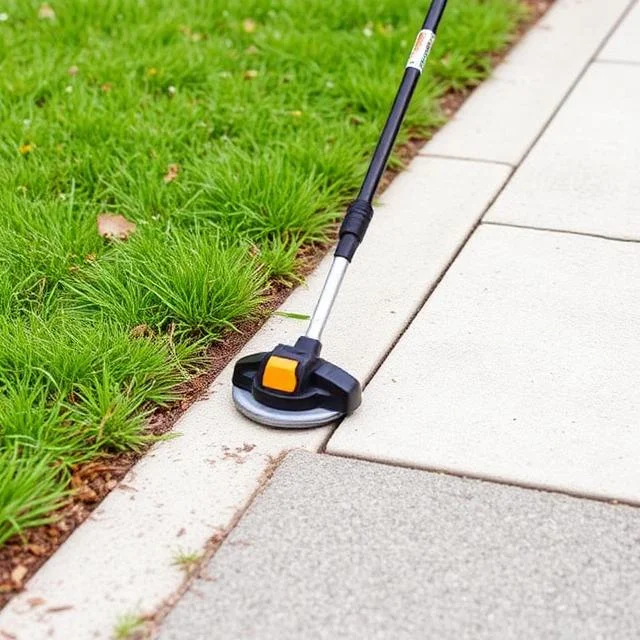
Edging deserves its own mention, because it’s what makes a cut look finished. Austin lawns spread by runners over walks and into beds, and limestone borders and curbs trap clippings. A crisp edge each visit keeps St. Augustine from creeping into beds and keeps the property reading as maintained, even in the weeks when the grass itself is slowing down. It’s also the first thing to slip when a visit is rushed, so it’s written into the checklist.
What does a mowing visit include?
A standard visit covers mowing at the right height for the grass, string-trimming around obstacles, edging beds and walks, and blowing clippings off hard surfaces. Debris pickup from the turf is part of it. Bed work, fertilizing, aeration and leaf cleanup are separate scheduled items so the scope stays clear and the price stays honest.
- Mow: cut to the height set for your grass and the season, with a sharp blade.
- Trim: string-trim along fences, trees, beds and limestone edges.
- Edge: clean edges along walks and beds.
- Blow: clear driveways, walks and patios.
- Report: note chinch bug patches, broken sprinkler heads, dry spots or storm damage so you can act.
Whether clippings are left or bagged, how skipped weeks and rain delays are handled, and what’s billed separately should all be written down. A quote that itemizes scope is easier to trust and easier to compare than a single lump sum.
What does our mowing process look like, step by step?
It starts with a quick look at your lot and ends with a standing schedule you can pause or change. Most lawns go from first call to a first scheduled cut within a week or two, depending on the season and the route. You approve the scope and the price before the first mow.
- Request and lot details. You tell us the address, rough lot size, grass type if you know it, and anything unusual such as gates or dogs. You decide the frequency you want to price.
- Quick lot review. We measure turf area, note slope, shade and obstacles, and check how the crew gets in. This usually takes a few minutes on site or from photos and a map.
- Written quote. You get a per-visit or monthly price, the visit checklist and the exclusions. You decide which extras, if any, to add.
- First cut. The first visit resets the lawn to the target height. If it’s overgrown, we step it down across visits instead of scalping it.
- Routine service. Weekly in the growing season, easing back as growth slows. You tell us if you want to skip a week or add a cleanup.
- Seasonal review. Each season we check height, edges and trouble spots with you, and adjust the plan for fall and winter.
How do Austin’s watering rules affect my lawn?
Under the current Conservation Stage, automatic sprinklers may run one assigned day a week, before 10 a.m. and after 7 p.m. Hose-end sprinklers and drip get up to two days, and hand-watering with a shutoff nozzle is allowed any time. Aim for about an inch of water a week in summer, including rain.
Mowing and watering work as a pair. A lawn cut tall can hold up on a one-day schedule far better than a short one, because the roots go deeper and the soil stays shaded. Water in the early morning so blades dry before night. If grass shows a bluish-gray cast or footprints that stay pressed in, it’s thirsty. The watering restrictions page keeps the current stage, and the lawn watering guide shows how to soak and measure.
What is different about mowing on Austin’s clay and caliche soil?
East of I-35, heavy Blackland clay compacts and stays soggy after rain, so mowing a saturated lawn ruts it. West, thin caliche over limestone dries fast and stresses turf in summer. Both are alkaline, which is why yellowing with green veins from iron chlorosis is common on St. Augustine and why lime is never the fix.
Practically, that means rescheduling when a lawn is too wet to cut without rutting, and holding height up on thin western soil. Compacted clay benefits from core aeration during active growth, which for warm-season grass is April through August, not fall. Our landscaping calendar lays out aeration, fertilizing and mowing by month.
What grass do I have, and does it change how it’s mowed?
Most Austin lawns are St. Augustine, with Bermuda and Zoysia common too. St. Augustine is the shade-tolerant, thirsty classic, Bermuda is the full-sun, traffic-tough choice, and Zoysia is dense and premium. Cool-season fescue doesn’t survive Austin summers. Each grass wants a different height and cut rhythm, so we ask first.
If you’re not sure what you have, check the light. Grass under live oaks and in shade is almost always St. Augustine, which spreads by runners and installs only as sod. A full-sun lawn that stays low and dense and handles foot traffic is more likely Bermuda. The grass types page has a comparison table. Mowing Bermuda at St. Augustine height, or the reverse, is a common reason a lawn looks thin by August.
How do I spot chinch bugs and summer stress before they spread?
Look for a dry-looking patch that keeps spreading even though you’re watering. In Austin that’s often chinch bugs, not just heat, and they’re a classic St. Augustine pest. Heat stress tends to show as a bluish-gray cast and footprints that stay pressed in the blades. A spreading brown patch with a yellow edge deserves a closer look.
Part of a mowing visit is noticing. A crew that walks the lawn every week sees a patch on its second day, not its tenth. We report what we see so you can act: a damp spot that points to a leaking head, a thin strip along the driveway, a patch of weeds along a shaded fence line. Catching it early keeps a small repair from becoming a sod job.
When do aeration and fertilizing happen on a warm-season lawn?
For St. Augustine and Bermuda, core aeration happens April through August while the grass is actively growing, not in fall like cool-season fescue. Fertilizing starts after green-up and two mowings, with the last feeding by early to mid September. There’s no annual fall overseed, because St. Augustine isn’t sold as seed.
| Month | Lawn task | Mowing note |
|---|---|---|
| March | Green-up begins, hold nitrogen until fully greened | Resume weekly mowing |
| April to May | First St. Augustine feeding after two mows, aeration window opens | Mow weekly |
| June to July | Bermuda first feeding, deep infrequent watering | Hold height tall, Bermuda every five to seven days |
| August | Aeration window closes, avoid feeding drought-stressed turf | Keep height up |
| September to October | Final feeding by early to mid September | Final mows of the season |
| November to December | Growth slows, leaf cleanup starts, first frost around early December | Reduce, then only top weeds |
Aerating a warm-season lawn in fall as it heads into dormancy can damage it, which is the opposite of what a northern lawn needs. That’s one more reason a calendar copied from somewhere else doesn’t work here. The Austin landscaping calendar carries the full month-by-month version.
How should I compare lawn mowing quotes in Austin?
Line them up on scope. Measured turf area, grass type, terrain, cadence, edging, trimming, bed work, cleanup, treatments and exclusions should all appear. Most quote differences are scope differences. A low number with a vague scope usually means something is missing, and a quote that itemizes is easier to trust than a lump sum.
Ask what’s billed separately: aeration, irrigation repair, leaf cleanup, tree and shrub work. Ask how rain delays and skipped weeks are handled, and how overgrown turf is brought back down. Ask which credentials, coverage and responsibility evidence apply to the scope, and get it before you authorize work. Treat any rock-bottom lowball or pushy door-to-door pitch as a red flag.
Finally, ask how the contractor handles Austin’s drought-stage watering rules and summer heat stress. A provider that can’t answer that for your lot isn’t ready for your lawn. Our own answer is written into the scope for every property we price, so you can see it before you say yes.
What does lawn care in Austin include beyond mowing?
Beyond mowing, lawn care usually means edging, bed weeding, light pruning, seasonal cleanup, aeration and fertilizing at the right times. For warm-season grass, the calendar runs mowing weekly April through October, fertilizing after green-up, aeration April through August, and leaf cleanup starting in October or November.
Fall leaf cleanup is its own item. Austin lawns drop leaves late, and live oaks shed in spring, which surprises people. Our leaf removal service covers that work, and oak trimming follows the Texas A&M Forest Service advice to avoid pruning oaks from February through June. Our oak care guide explains why.

What does a typical lawn mowing job look like?
Here are three typical scopes built from the ranges above. They show how mowing is priced for a given kind of Austin lot, not jobs we’ve finished, and your own price comes only after we’ve looked at the property, measured the turf and written down exactly what each visit covers.
A typical east-side townhome lawn
A small, flat Blackland clay lot under 5,000 square feet with St. Augustine. Weekly mow, edge and blow at $45 to $55 a visit in season, easing to every other week in late fall. A basic monthly plan lands in the $150 to $200 range.
A typical mid-size suburban lawn
A 5,000 to 10,000 square foot lot in a Round Rock or Cedar Park subdivision with St. Augustine and some shade. Weekly mowing at $55 to $75 a visit, held tall in summer, with a standard plan adding bed weeding and light pruning at $200 to $325 a month.
A typical half-acre Hill Country lot
A sloped, rocky lot with Bermuda in full sun. Per-visit pricing in the $75 to $95 band, with extra trimming around limestone and trees. Bermuda is cut every five to seven days at peak growth, so the crew plans a tighter rhythm in June.
Which Austin suburbs do you mow in?
We mow across Austin and nearby Travis, Williamson and Hays County communities, including Round Rock and Cedar Park. Prices follow lot size, slope and access, not the suburb name, so the same bands apply from the east side to the Hill Country edge.
The full list is on our areas we serve page. When you’re ready, request a free quote or call (512) 690-4912, tell us your address and lot size, and we’ll send a written price.
Which evidence sets the schedule and price for Lawn Mowing?
Pricing and scheduling depend on measured area, property conditions, access, selected inclusions, exclusions, local requirements, and written responsibility. Confirm all terms for the Austin property before authorization.
What’s Included
- Property and affected-area identification
- Written inclusions, exclusions, and responsibilities
- Price and timing confirmed in writing
- Completion standards defined before authorization