
Evidence detail: How much does Leaf Removal cost in Austin, TX?
Austin leaf removal scope depends on measured property conditions, selected inclusions, access, local requirements, and written responsibility. Call (512) 690-4912 or use the quote form to submit the property and requested service for review. Price, response timing, and availability require written confirmation.
Leaf removal in Austin typically runs $200 to $600 per cleanup visit, depending on how much material comes off the property. Fall drop peaks late and spring brings its own shed from live oaks, so most yards need more than one pass. Call (512) 690-4912 or request a free quote and we’ll look at the yard.

This page covers what leaf removal and seasonal cleanup cost in Austin, when the leaves really come down here, why live oaks surprise new residents, what the City will take at the curb, and how storm debris differs from routine leaf work. It’s written for Central Texas trees and warm-season turf, not for a northern maple lawn.
How much does leaf removal cost in Austin?
A seasonal cleanup that hauls debris, cuts back perennials and refreshes beds typically runs $200 to $600 per visit on our cost page, depending on how much material comes off the property. Canopy density, lot size, access and whether leaves are on turf, in beds or on a roof set where you land.
That range sits on the same Austin landscaping cost page as the rest of our pricing, so this page and that one agree. We don’t publish a per-bag or per-hour number, because two lots with the same square footage can drop wildly different volumes. A yard with three mature pecans and a live oak is a different job from a new lot with two young trees.
| What moves the price | Lower end | Higher end |
|---|---|---|
| Canopy | A few small trees | Mature oaks, pecans and cedar elms over most of the lot |
| Where the leaves sit | Open turf | Dense beds, ground cover, gutters, roofs |
| Access | Open gates, short haul | Narrow gates, steps, slope |
| Condition | Kept up through the season | Matted for weeks, mixed with branches |
| Disposal | Small load | Large volume hauled off |
Combining the cleanup with routine mowing keeps both cheaper. A crew already on site doesn’t need a separate trip, and a lawn that’s been cut regularly shows leaves and clears them faster. See our lawn mowing page for the per-visit ranges.
One honest note on budgeting: the cheapest year is the one where cleanup is spread across the drop. A single heavy visit in December means more volume, more hauling and more recovery on the turf underneath. Two or three lighter passes cost less each, keep the lawn healthier and leave the beds in shape for fall planting. If you tell us how many large trees you have and when they usually drop, we can set the number of passes before the first leaf falls.
When do leaves fall in Austin, and when should I schedule cleanup?
Fall leaf drop starts as nights cool in October, builds through November, and finishes around the first frost, usually early December. Our calendar starts leaf cleanup in October or November. Then there’s spring, when live oaks shed their old leaves as new growth pushes, so one fall visit isn’t the whole story.
Live oaks are evergreen here, which surprises people from elsewhere. They drop old leaves in spring, not fall, so the heavy mess in March and April comes from the tree you thought kept its leaves all winter. Pecans, cedar elms and other deciduous trees drop in fall. A yard with both has two cleanup seasons.
| Window | What’s falling | What to plan |
|---|---|---|
| Late October to early December | Pecan, cedar elm, other deciduous trees | One to three passes through the drop window |
| March to April | Live oak spring shed, plus pollen and catkins | One cleanup after the shed, before beds fill in |
| After a storm | Limbs, twigs, green leaves | Call-out cleanup, separate from routine visits |
Waiting until everything is down and doing one big cleanup in mid-December works for some yards, but leaves that mat on turf for weeks can smother St. Augustine and invite fungus. Several lighter passes during the drop are usually easier on the grass and easier on the budget than one heavy recovery job.
Why should leaves come off the lawn and beds?
A thick mat of leaves blocks light and air from turf, holds moisture against the crown and invites disease, particularly on St. Augustine. In beds, matted leaves can smother low plants and shelter pests. A thin layer of shredded leaves is fine and can feed the soil. A blanket isn’t.
The difference is thickness and form. Shredded leaves mixed into mulch break down and feed the soil. Whole leaves layered on a lawn can mat, especially after a rain, and then dry into a crust. We remove the mat and leave beds with a thin, even layer where that makes sense.
Gutters and roofs are the other place leaves cause trouble. Water backing up from a clogged gutter can end up at the foundation, which on Austin’s clay isn’t a small problem. If your gutters and downspouts load up with leaves each fall, include them in the scope or ask who handles them.
What does our leaf removal process look like, step by step?
We walk the property, agree on what’s in scope, then clear the material and haul it away or arrange disposal as agreed. A typical cleanup is a single visit, and recurring work through the drop window is scheduled in advance so you aren’t calling each week.
- Request and tree review. You tell us the address, the trees on the lot and any areas to include or avoid. You decide whether you want a one-time cleanup or several passes.
- Walk and scope. We look at turf, beds, gutters, access and what’s already on the ground, and write down the scope. You decide on extras such as gutters or bed cutback.
- Written price. You get a per-visit price, the number of passes and what happens to the debris. You approve before we schedule.
- Clear and blow. Leaves are raked, blown or vacuumed from turf, beds and hard surfaces, working with the grass rather than scraping it. One visit for most yards.
- Haul or stage. Material is hauled off or bagged and staged for the City, as agreed in the scope. You decide which route you prefer.
- Follow-up pass. If trees are still dropping, we schedule another pass and adjust the price to the volume. We note beds that need mulch, pruning or other work.
What does the City of Austin accept for leaves and yard trimmings?
Austin Resource Recovery takes leaves and small yard trimmings in the green composting cart, loose or in paper bags, with the lid closed. Extra material goes in lawn-and-leaf paper bags next to the cart. Branches over five feet long or three inches thick go through on-demand brush collection or a drop-off site.
Plastic bags aren’t the right container. The City’s guide says to use paper bags for extra yard trimmings, and material set out in plastic can be collected as trash. Small branches and tree limbs are bundled and placed at the curb, no longer than five feet and no wider than three inches.
For larger loads, the City accepts tree limbs, branches, shrubs and leaves at Austin Water’s Hornsby Bend plant. A government-issued photo ID is required, and beginning October 1, 2026 customers pay a fee and are subject to a daily volume limit. Treated lumber, construction material and trash aren’t accepted. Check the City’s page for the current figure before you go. Many homeowners find that hauling volume costs more of a weekend than a cleanup visit does.
Should leaves be bagged, hauled or left on the lawn?
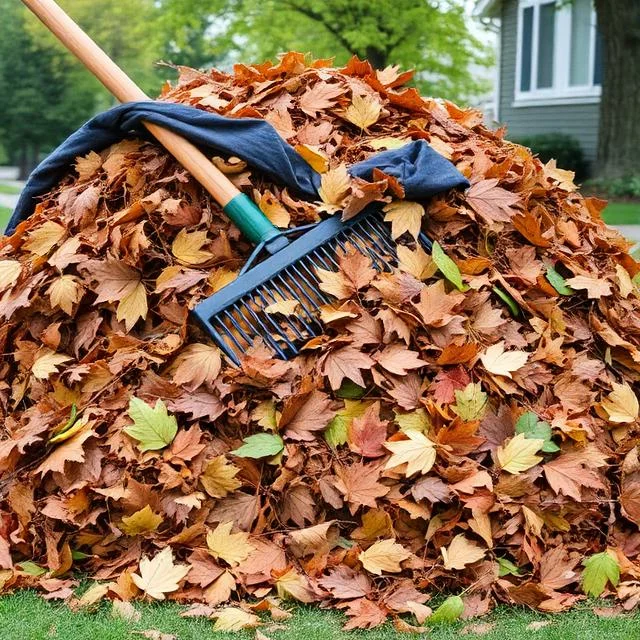
It depends on volume. A light fall of leaves can be mowed and shredded in place, which returns organic matter to the soil. A heavy drop mats, so it’s removed. Leaves from the beds can be shredded into mulch or composted. What’s left goes to the green cart, paper bags or a haul-off, as agreed in the scope.
The test is simple. If you can still see the grass blades through the leaves after you mow, shredding in place works. If the leaves are deeper than the mower can chop, they’ll smother the lawn underneath, and they need to come off. Wet leaves are the other limit. A mat of wet oak and pecan leaves is heavy, slick and slow to dry, so those get raked or vacuumed rather than mulched.
Diseased material is a special case. Don’t compost leaves from a tree you know is sick, and don’t move oak branches around in the spring window. If you suspect oak wilt, call an arborist before anything is cut or hauled, because moving infected wood spreads it.
How do fallen leaves affect gutters, downspouts and drainage?
Leaves clog gutters and downspouts, and a clogged gutter spills water at the foundation instead of carrying it away. On Austin’s expansive clay, that’s the same pooling that stresses a slab. Leaves also clog yard drains, channel drains and swales, so a leaf season is a good time to check every water path on the lot.
If you have a drainage easement on your lot, the City expects you to keep the surface clear of debris and obstructions to the natural or designed flow of water. Dumping yard waste in an easement is prohibited because it can block flow or catch debris, and blocked flow can be reported to 3-1-1. That applies to a pile of raked leaves against a ditch as much as it does to brush.
The takeaway is practical. Before the drop starts, check gutters, downspout extensions and any drain inlets, and clear them again after the main fall. If a spot keeps collecting water and leaves, that’s a sign it needs a real fix, and our drainage solutions page explains the options.
What should a leaf removal quote say?
A good quote names the areas included, the number of passes, how debris is handled, and what’s excluded. It should say whether gutters, roofs, beds and ground cover are in scope, what happens if volume runs over the estimate, and how storm debris is treated. A single lump sum with no scope can’t be compared.
When you compare bids, line them up item by item. One may price a single pass and another three. One may include haul-away and another leave bagged piles at the curb. Ask who removes the material and where it goes, because the City’s rules about paper bags and size limits make a difference, and a pile left in plastic can turn into a collection problem.
Also ask what triggers an extra visit. In a heavy drop, a yard can be clean on Tuesday and covered again by Friday. The scope should say whether more passes are separate line items or part of a seasonal price.
Do you do leaf removal for HOAs and commercial properties?
Yes, as part of a commercial or HOA scope. Common areas, entrance beds, parking-lot islands and amenity lawns collect leaves like any yard, and a board wants a schedule and a written record. We set passes by the drop calendar and note what was done, so the manager has a paper trail.
Commercial sites also have to think about safety and appearance. Leaves on walks and parking aprons become slip hazards when wet, and entrance beds are the first thing visitors see. Our commercial landscaping page explains how scopes, visits and approvals are set up for managed properties.
What is different about storm debris compared with leaves?
Storm debris is limbs, branches and broken trees, not leaves, and it needs different equipment and caution. Ice, not snow, is the winter threat here, and live oaks and cedar elms drop limbs under glaze. Photograph damage before anything is moved, and don’t let anyone top a tree to make it safe.
Oak wilt matters after storms. Texas A&M Forest Service advice is to seal every oak wound immediately, in any season, including storm damage cleaned up the same day, and to avoid pruning oaks from February into early summer. Fresh cuts open a door for the beetles that carry the fungus. If an oak is damaged in the spring window, sealing the wound matters more, not less.
Large tree work, anything needing a bucket truck or involving a heavy limb over the house, is a tree-service job. Our tree service page explains how that’s priced and scheduled. Our ice storms and drought guide and oak care guide cover prevention and timing.
Does fall cleanup tie into the rest of the yard calendar?
Yes. In our month-by-month calendar, October brings the final mows of the season, the end of fertilizing and the start of leaf cleanup. November slows growth, and the first frost usually arrives in early December, which starts dormancy. Cleanup sits between the last mow and the winter shutdown.
It’s also the right moment for bed prep. Once leaves are off, you can see what needs cutting back, where mulch has thinned and which low spots held water through the fall. Fall is also the strongest planting window in Austin, September through November, so a clean bed is ready for new plants. Our landscaping calendar lays out the month-by-month tasks.

Do clay and caliche soil change how leaves should be handled?
Somewhat. On heavy Blackland clay, a wet leaf mat holds moisture against turf and soil that already drains slowly, so removal matters more. On thin caliche over limestone, a thin layer of shredded leaf mulch helps hold moisture in dry beds. The key is thickness and form, not the soil label.
Both soils are alkaline, so there’s no reason to add lime, and compost from your own leaves is a good amendment for either side of town. Our soil guide explains the two soils and how to amend them. The practical tip is to shred what stays and remove what mats.
Can I do leaf cleanup myself, and when is it worth hiring out?
Many homeowners handle a light drop themselves. It’s worth hiring out when the canopy is heavy, the lot is large, the leaves are matted, or you can’t spare weekends in November. A crew with blowers and a haul-off finishes in one visit what takes a household several, and gets beds clean without tearing up turf.
If you do it yourself, work with the weather. Dry leaves are lighter and easier to move, and a rake with flexible tines is gentler on St. Augustine runners than a stiff one. Keep your pace tied to the drop, not to a single big Saturday, and stay out of the lawn when it’s saturated, since clay ruts easily and takes a long time to recover. Wear gloves around oak branches and wet piles, and don’t pile leaves against fences, sheds or the house, where they hold moisture against wood.
Whichever route you choose, the calendar is the same: lighter passes through the drop, a clean-up after the main fall, and a spring look after the live oaks shed. If you’d rather not think about it, a seasonal plan puts those visits on the schedule in advance.
What does a typical leaf removal job look like?
Here are three typical scopes built from the cleanup range above. They show how cleanup work is organized for a given kind of Austin yard, not jobs we’ve finished, and your own price is set only after we’ve walked the property and written down what’s in scope.
A typical small yard with two deciduous trees
A flat east-side lot with a couple of pecans or cedar elms. One fall cleanup after most of the drop, lawn and beds blown and cleared, material hauled. This sits at the lower end of the $200 to $600 range.
A typical mature-canopy lot
A larger lot under several oaks, pecans and elms, with dense beds. Two or three passes through the fall drop, plus one spring cleanup after the live oak shed. Each visit is priced to volume, and gutters are added as a separate line.
A typical post-storm cleanup
Limbs and twigs on turf and beds after an ice event. Debris is cleared, hauled and sorted, with larger limbs and any tree removal separated into a tree-service scope. Oak wounds are sealed immediately.
Which Austin suburbs do you serve for leaf removal?
We serve Austin and nearby Travis, Williamson and Hays County communities, including Round Rock, Cedar Park and Lakeway. Older neighborhoods with mature canopy tend to need the most passes, while newer subdivisions with young trees often need one. Commercial and HOA sites are scoped separately.
The full list is on our areas we serve page. When you’re ready, request a free quote or call (512) 690-4912, tell us your address and how many big trees you have, and we’ll send a written price.
Which property evidence belongs in the approach to Leaf Removal?
An Austin leaf removal scope should document sun, drainage, soil, existing systems, access, selected work, exclusions, and project details for the specific property.
Process Overview
- Site assessment and consultation
- Written estimate with line-item scope
- Scheduled work window confirmed
- Work is authorized only against the written estimate
- Completion standards are reviewed against the authorized scope