
Lawn Mowing & Maintenance
Turf-area, grass-type, obstacle, edging, trimming, cadence, and cleanup scope.
Learn About This Service →Expert Lawn Care, Landscaping & Hardscaping for Austin-area homes and businesses
Turf-area, grass-type, obstacle, edging, trimming, cadence, and cleanup scope.
Learn About This Service →Patio, wall, walkway, drainage, base, access, material, permit, and engineering considerations.
Learn About This Service →Sun, soil depth, drainage, mature plant size, irrigation demand, access, and phased planning.
Learn About This Service →Zone, controller, coverage, pressure, leakage, water-authority, and licensed-irrigator considerations.
Learn About This Service →Material, affected area, access, timing, and haul-off expectations for Austin properties.
Learn About This Service →Site boundaries, access windows, reporting, irrigation responsibility, approvals, and written estimate.
Learn About This Service →{“@context”:”https://schema.org”,”@type”:”FAQPage”,”mainEntity”:[{“@type”:”Question”,”name”:”For the Austin property record, what areas of Austin do you serve?”,”acceptedAnswer”:{“@type”:”Answer”,”text”:”We serve all of Austin plus 14 Central Texas suburbs. That includes Round Rock, Cedar Park, Pflugerville, Georgetown, Leander, Hutto, Manor, Bee Cave, Kyle, Buda, Lakeway, Dripping Springs, San Marcos, and West Lake Hills. The same crews cover Travis, Williamson, and Hays County neighborhoods on weekly routes.”}},{“@type”:”Question”,”name”:”For the Austin property record, how do you price lawn care in Austin?”,”acceptedAnswer”:{“@type”:”Answer”,”text”:”Lawn care in Austin runs $45 to $120 per visit for most homes. Pricing is a flat monthly rate set by property size, service frequency, and turf type. You get a firm written quote before any work starts: no fuel surcharges, no seasonal price creep, and no upsells once the crew is on site.”}},{“@type”:”Question”,”name”:”Do you use Texas-native plants?”,”acceptedAnswer”:{“@type”:”Answer”,”text”:”Yes, native plants are our default recommendation for Austin beds. Eastern redbud, flowering dogwood, tulip poplar, Texas coneflower, and purple coneflower all handle Central Texas clay soil and hot summers with far less water and no routine chemical inputs. Natives also feed local pollinators and hold up under Austin watering restrictions.”}},{“@type”:”Question”,”name”:”How do you handle the mixed-grass issue?”,”acceptedAnswer”:{“@type”:”Answer”,”text”:”We identify your grass type first, then match care to it. Most Austin lawns run St. Augustine, Bermuda, or Zoysia, so we set mowing height, watering, and feeding for whichever warm-season grass you have: St. Augustine in shade, Bermuda or Zoysia in full sun. A cool-season lawn fighting this climate is why Austin yards fail in July.”}},{“@type”:”Question”,”name”:”For the Austin property record, what’s the best time of year to start service?”,”acceptedAnswer”:{“@type”:”Answer”,”text”:”Spring (March-April) and early fall (September-October) are the best times to start service in Austin. Spring starts get warm-season turf ahead of summer heat and weed pressure, and fall starts rebuild roots while soil is still warm. We onboard year-round, but those two windows deliver the biggest first-season payoff.”}},{“@type”:”Question”,”name”:”Do you provide a written quote before starting?”,”acceptedAnswer”:{“@type”:”Answer”,”text”:”Yes. We give you a free, no-obligation estimate and a written, itemized quote before any work begins, so you know the full scope and price up front.”}}]}
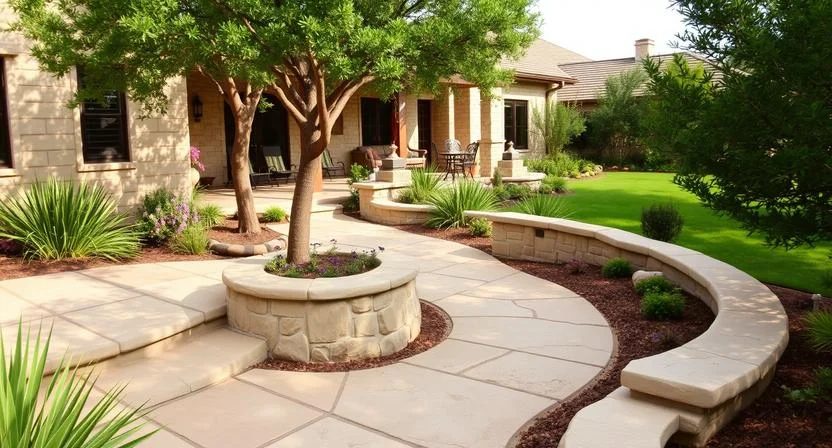
How much does landscaping cost in Austin? Pricing depends on the service: weekly lawn mowing runs $45 to $95 per visit and commercial grounds maintenance runs $800 to $4,500 per month. Irrigation, hardscape and landscape build projects are priced by the licensed contractor who builds them, so we help you plan the scope first. Most homeowners start with recurring lawn care and add projects over time. Free written estimates: (512) 690-4912.
Most Austin homeowners have already been through a crew that scalped St. Augustine in July, or one that quoted a shaded Hyde Park lot as if it were open sun. What they want next is someone who turns up on the day promised, cuts at the height the grass actually needs, and is still answering the phone in August. That is what Austin Pro Landscape is built to be.
We’re a locally operated landscaping company serving Austin and the Travis County suburbs — Austin, Round Rock, Cedar Park, Pflugerville, Georgetown, Leander, Hutto, Manor, Bee Cave, Kyle, Buda, and Lakeway. Each written estimate identifies the selected provider, responsibility, visit terms, and approval path before work begins.
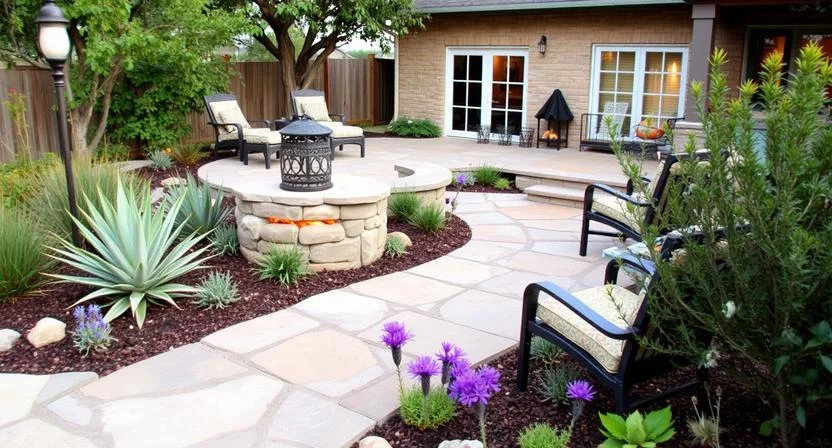
Austin Pro Landscape provides seven core services across Travis County and the surrounding suburbs: weekly and bi-weekly lawn mowing, custom landscape design, hardscape installation, smart irrigation, seasonal leaf and debris removal, commercial grounds maintenance, and professional tree care. Every service is tuned for Central Texas conditions — caliche-and-limestone soil west of Mopac, heavy black clay east of it, and the summer heat and drought patterns that determine which grasses, plants, and hardscape materials actually hold up.
Beyond the services above, we also take on xeriscaping in Austin, sprinkler repair in Austin, Austin sod installation, retaining walls in Austin, drainage solutions in Austin, backyard design in Austin, Austin patio contractors, and commercial landscaping in Austin for Austin homes and businesses.
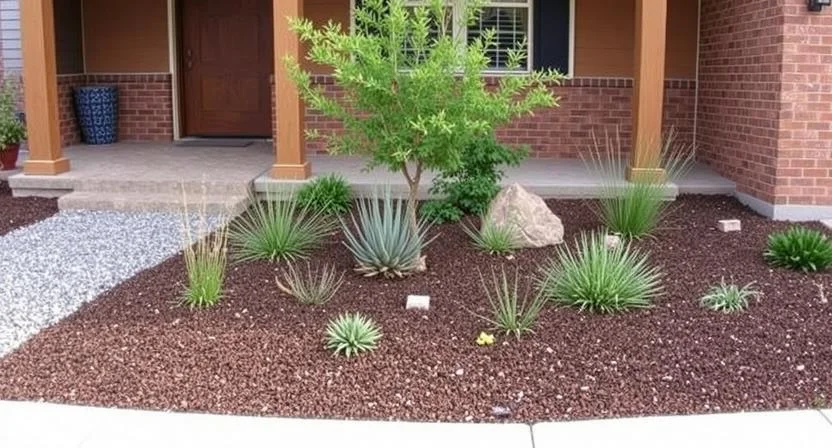
Austin landscaping is different from other cities because of three specific conditions that nothing else in the country combines: brutal 100-plus-degree summers that run June through September, soil that splits between caliche-over-limestone west of Mopac and heavy black clay east of it, and warm-season grasses (St. Augustine, Bermuda, Zoysia, and Buffalo) that all behave differently under Stage 2 watering restrictions. Get any one of those wrong and the yard browns out in two weeks.
Austin sits in the warm-season grass belt — not the transition zone, not the cool-season belt. St. Augustine dominates most established Travis County yards because it tolerates partial shade and grows fast, but it browns out under Stage 2 watering restrictions and gets eaten alive by chinch bugs in July. Bermuda handles drought but goes dormant straw-brown all winter. Zoysia bridges the gap and is gaining ground in newer developments. Buffalo grass and native sedges are quietly becoming the smart play on lots where the owner is tired of fighting summer water bills. Get the wrong crew running a 1.5-inch deck on St. Augustine in July and the yard scalps in two weeks.
Add the soil. Travis County east of Mopac is heavy black clay that holds water like a sponge then bakes into pottery by August. West of Mopac is thin caliche over limestone bedrock — barely six inches of soil before you hit rock. Neither responds to standard topsoil amendments. We work with what’s actually there: proper grading and drainage planning for the clay side, raised beds and drought-tolerant material for the limestone side, and Texas-native plants that survived 2011 and 2023 without irrigation.
And the weather extremes. The February 2021 freeze and the 2022-2023 drought cycle taught Austin homeowners what real climate stress looks like. Most landscapers cut corners on base prep for hardscape and skip proper root establishment on new plantings because they’re betting the next extreme event won’t hit on their watch. Plan for the event: base prep for hardscape and proper root establishment on new plantings are what hold up when extremes arrive.
Austin lawn-care requests should identify turf area, grass type, obstacles, access, desired cadence, edging, trimming, and cleanup expectations. Provider staffing is not assumed.
One rate, agreed before we start. Mowing, string trimming, edging and blow-off are all inside the quoted price, and so is keeping the beds tidy on the visit. Nothing is added on the day, and nothing on your property turns out to be somebody else’s job once we are already standing on it.
Submit the Austin property and requested service for review. Availability, response timing, and scheduling require written confirmation.
A written, itemized quote before any work begins.
Most Austin landscaping companies bury the real number behind a layered quote. Before you sign with any of them, our roundup of the best landscaping companies in Austin shows how the top local crews actually compare. Base rate plus fuel surcharge plus per-visit add-ons plus seasonal premium plus the line items they spring on you mid-job. We don’t do that. Our quote is a flat number that covers everything we’ll do at your property — mowing, edging, trimming, blow-off, bed maintenance — for the season.
For mowing, most quarter-acre to half-acre Austin lots run $45 to $75 per visit on a weekly schedule. Larger Travis County properties and Round Rock-style estate lots run $75 to $140 depending on terrain and obstacles. We give you the number on the quote call. No upselling, no surprise charges.
Hardscape, design and irrigation work is quoted in writing, with materials, labour and a timeline set out separately so you can see what each part costs. Nothing is signed until you have the whole plan, and we do not ask for money to begin designing. We come to the consultation already knowing whether the lot sits on black clay or on caliche over limestone, because that decides most of what follows.
For an Austin property-specific review, call (512) 690-4912 or submit the service and scope details online.
Watering days are restricted this year. Check the 2026 Austin watering rules & lawn calendar for your allowed day and a month-by-month plan.

Compare landscapers in Austin on four things: a written, itemized scope, a stated price per visit or per project, a plan for the watering stage the city is in, and the ground they will actually work on, whether Blackland clay or thin caliche. A quote missing any of those four is a guess.
Ask each company to name the grass type and the mowing height in writing. Our best landscaping companies in Austin guide shows how local crews compare on those points, and the hiring checklist covers the questions to ask on the phone.
Landscaping services in Austin usually split into recurring work and projects. Recurring work is lawn mowing, edging, bed upkeep and seasonal cleanup. Projects are landscape design, hardscape, irrigation, drainage, sod and tree care. Most homeowners start with a mowing plan and add one project at a time as the budget allows.
You can read each service in detail: lawn mowing, landscape design, irrigation, tree service and commercial landscaping.
Landscape operation and maintenance planning is a written schedule of what gets done to your yard, how often and by whom across the year. In Austin it covers mowing height and cadence, watering day and controller settings, bed refreshes, pruning windows and the fall overseeding or aeration slot for warm-season turf.
A good plan follows the calendar. Our Austin landscaping calendar lays the year out month by month, and the watering rules page shows the days your system is allowed to run.
Austin lawn care typically runs $45 to $95 per visit, based on lot size and how much edging and trimming the property needs. Monthly maintenance plans run $150 to $450 or more. Those ranges come from our Austin cost guide, so the homepage, the guide and the quote you receive should line up.
Project work is priced by material and square footage rather than by visit. The full table is on the Austin landscaping cost page, and a free written estimate is a short quote request away.
A local Austin landscaping company typically covers the city plus the surrounding Travis, Williamson and Hays County suburbs. Our routes reach Round Rock, Cedar Park, Pflugerville, Georgetown, Leander, Kyle, Buda, Lakeway, Bee Cave and Dripping Springs. Availability is confirmed against your address before any work is scheduled.
Each suburb has its own page with local soil and watering notes, such as Round Rock, Cedar Park and Lakeway, and the full list sits on the areas we serve page.
Identify the Austin property, affected areas, access conditions, and the service being considered.
Document grass, soil, drainage, watering, permit, utility, and seasonal conditions that affect the requested work.
Confirm inclusions, exclusions, materials, timing assumptions, cleanup, authorization, and responsibility in writing.
No work or provider claim is implied by this site. Availability and project terms require written confirmation.
Consider property measurements, visible conditions, access, and your priorities before choosing a service. A clear landscaping plan can outline questions to review during a site visit.
Place preparation, protection and corrective work in their own line items. List finish selections separately, with quantities and exclusions, so the owner can change an optional choice without losing the underlying scope.
Hidden conditions, untested equipment and unmeasured areas cannot be settled from a web page. Keep those items open and state who will confirm them before the landscaping price or sequence becomes final.
Use this form to request a written landscaping scope for an Austin property. Availability, project responsibility, and terms are confirmed before work is authorized.